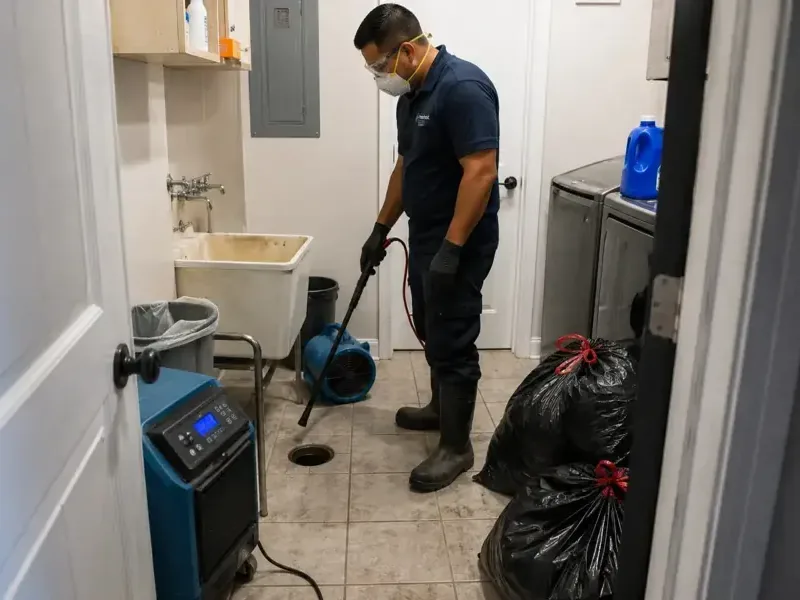
Most appliance leaks start small: a cracked washer hose, a loose dishwasher drain, a pinched ice maker tube behind the refrigerator or a toilet supply that drips. Because the water runs under cabinets and flooring first, it often goes unnoticed until boards lift, baseboards swell or the room below shows a stain.
Common appliance and fixture leaks
- Rubber washing machine hoses that split with age
- Dishwasher supply and drain connections under the counter
- Refrigerator ice maker and water dispenser tubing
- Toilet supply connectors and wax ring seals
- Sink drains and garbage disposals inside the cabinet
Supply leaks carry clean water, Category 1. Washer and dishwasher drain water is gray water, Category 2, which changes what can be dried and what comes out. Appliance recalls for hoses and valves are listed by the Consumer Product Safety Commission.
Drying under cabinets and appliances
Cabinet bases and the subfloor under them trap water. The tech who does the walkthrough checks the toe kicks, the cabinet floors and the walls behind with meters. Toe kicks are often removed so air can be pushed under the cabinets, and small holes in the cabinet floor or the wall bottoms let the drying team move air through closed spaces without pulling the cabinets out.
Laminate and vinyl plank trap water underneath and usually come up. Tile and wood are judged by readings, and wood may get floor drying mats.
Preventing the next one
- Braided stainless washer hoses instead of rubber
- A leak sensor under the sink, the dishwasher and the refrigerator
- A quick look under cabinets every few months
- Knowing where each fixture's shutoff valve sits
The EPA WaterSense leak checks cover simple tests for toilets and fixtures.
A washer hose under full pressure can release several hundred gallons an hour if it bursts while nobody is home.