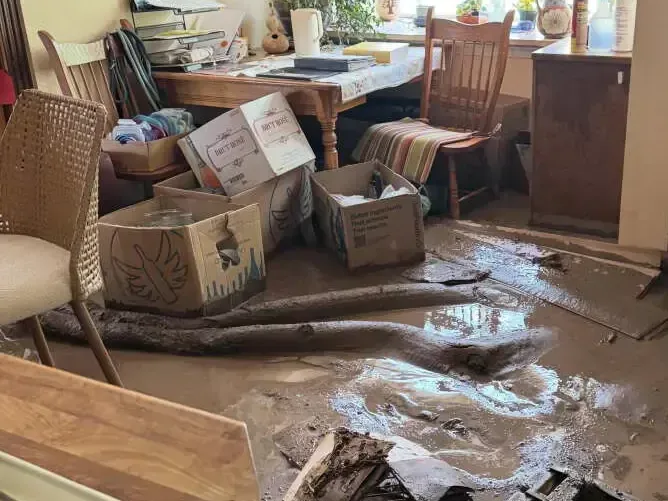
San Diego's rain comes in bursts. The airport gauge averages roughly 10 inches a year, most of it between November and March, and a single atmospheric river can drop a big share of that in a day or two. Runoff from hillsides, streets and hardscape reaches homes through door thresholds, garage doors and lower floors built into slopes.
Why storm water is treated as contaminated
Water that crosses lawns, streets and storm drains picks up soil, oils, bacteria and debris before it comes inside, so the IICRC S500 standard treats rising and outside flood water as Category 3. Carpet, pad and drywall it soaked are removed above the high-water mark, and the remaining structure is cleaned and treated before drying.
Where it gets in here
- Homes cut into slopes on Mount Soledad and in Muirlands, where runoff presses against the uphill wall
- Garages and lower levels that sit below street grade
- Flat ground near the beach, where water pools when drains cannot keep up
- Patios and planters that slope toward the house instead of away from it
The National Weather Service San Diego office issues flood watches and warnings before big storms, and Ready.gov flood advice covers what to do before and after water rises.
How the cleanup runs
The flood cleanup crew extracts standing water and shovels out mud and debris. Wet drywall is cut out in a level band above the high-water mark, and soaked insulation, carpet and pad come out. Hard surfaces are cleaned and treated with an EPA-registered antimicrobial, and then the drying team sets air movers and dehumidifiers until the readings meet the goal.
Flood insurance is separate from homeowners coverage. Rising water is usually covered only by a flood policy, while wind-driven rain through a damaged roof or window falls under the homeowners side. The claim file keeps the two apart with photos of the high-water mark and the entry points.
Storm water that came in under a door is not clean rainwater. Anything porous it soaked is removed rather than dried.