Shops, offices and condo buildings

Commercial Water Damage Restoration in La Jolla, CA

A water loss in a shop, a restaurant, an office or a condo building affects tenants, owners and schedules. The commercial restoration team extracts, contains and dries in phases so as much of the building as possible stays open.

(888) 450-9281Water in the building? Call the commercial team
Phased drying plans Containment between suites Records for owners and associations
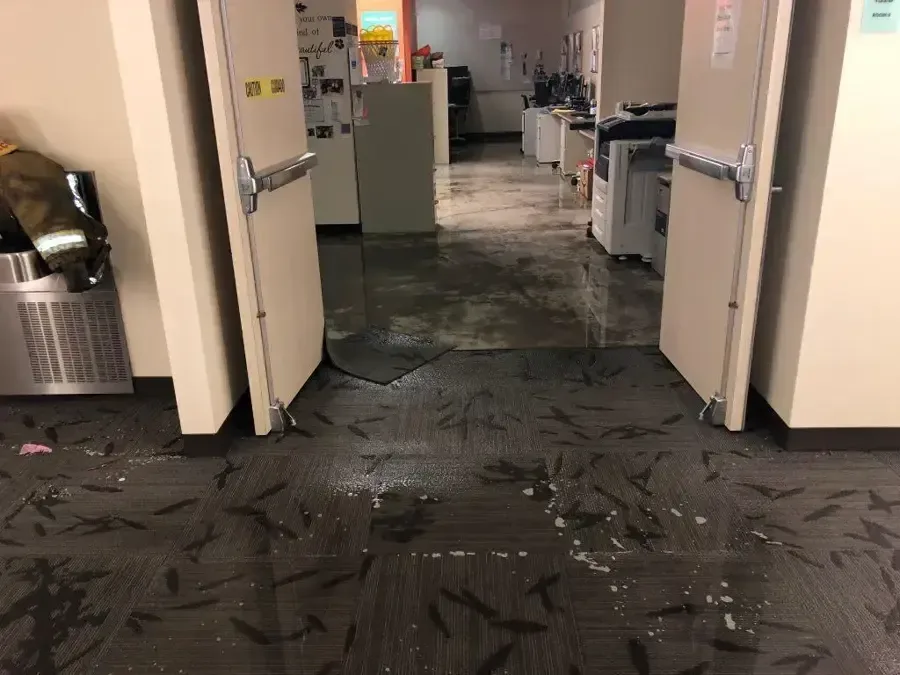
Standing water over carpet tiles in an office corridor
Right now

First steps for commercial water damage restoration

  1. Stop the source

    Close the building main or the floor valve, and call the building engineer for a sprinkler pipe.

  2. Protect people and power

    Keep staff and customers away from wet areas and shut off power to wet circuits if it is safe.

  3. Notify the parties

    Tell the owner, the property manager or association and the tenants above and below.

  4. Photograph every space

    Record each wet suite, the source and damaged stock or equipment.

The loss at a glance
Water category1 to 3, set by the source
Typical sourcesSprinkler, supply and roof drains
ApproachPhased drying with containment
Drying standardIICRC S500
Typical cost ranges

What does commercial water damage restoration cost in La Jolla, CA?

In La Jolla, CA, commercial water damage restoration typically runs $5,000 to $50,000 or more, depending on square footage, how many suites or units are wet, the water category and how much work has to happen after hours.

One suite or shop

$5,000 to $12,000
  • Extraction and containment
  • Carpet tile and wall drying
  • After-hours work where needed

Several suites or a floor

$12,000 to $30,000
  • Phased drying plan
  • Air scrubbers in occupied areas
  • Records by suite

Building-wide or Category 3

$30,000 to $50,000+
  • Several floors dried
  • Category 3 removal
  • Full documentation for every party

Ranges are typical, not a quote. Water category, square footage, material class and how fast drying started move the number most. The water damage cost calculator gives a closer planning range.

How the work runs

How commercial water damage restoration is handled

The tech who does the walkthrough maps moisture before any equipment goes down, and the equipment stays until the readings say dry.

Dispatch at any hour

Active water keeps moving through pad, plaster and framing after dark, so the response team treats it as urgent around the clock.

Dried to IICRC S500

Drying is planned from the class of loss and finished on meter readings, not on how the surface looks.

A file the adjuster can follow

Moisture maps, daily logs and photos taken before any demolition go to the insurer with the scope.

Coastal housing know-how

Raised-floor cottages, slab ranch homes, hillside lots and condo stacks each hide water in different places.

  1. Map every space

    The commercial restoration team maps wet areas suite by suite and floor by floor.

  2. Contain and phase

    Containment walls and a phased plan keep dry areas open while wet zones are worked.

  3. Extract and dry

    Extraction, removal and structural drying run in each phase with daily readings.

  4. Document by area

    Readings, photos and the scope are organized by suite or unit for each party.

Commercial buildings here range from shops and restaurants along Prospect Street and Girard Avenue to offices, medical suites and multi-story condo and apartment buildings near the coast. A broken sprinkler pipe, a failed supply on an upper floor or a backed-up roof drain can wet several suites at once, and each one has its own tenant, schedule and insurer.

Planning the drying around the business

The commercial restoration team maps every wet area across suites and floors before setting equipment, then splits the work into phases. Containment walls separate the wet zones from the spaces that can stay open, and air scrubbers keep dust out of occupied areas. Noisy equipment can run after hours where the readings allow.

  • Restaurants: kitchens, storage areas and dining rooms with tile, grout and cabinet bases
  • Retail: carpet tile, stockrooms and displays
  • Offices and medical suites: carpet tile, wiring under floors and records
  • Condo buildings: unit-to-unit leaks, corridors and common areas

Records for every party involved

Owners, associations, tenants and insurers all need the same facts. The file includes a moisture map of each suite or unit, daily readings, photos taken before any demolition and a scope separated by area, so each party can see what happened in its space. Ready Business covers emergency planning for a water loss, and the California Department of Insurance explains commercial policy basics.

Water categories in commercial losses

Sprinkler and supply water usually start as Category 1, but water that runs across floors, through ceilings and into elevator pits picks up contamination. Restaurant floor drains and sewer backups are Category 3 from the start. The category decides what is removed and what is dried.

Knowing where the building's main shutoff and sprinkler control valves are, and who holds the keys, saves the most time in a commercial water loss.

Related

Related water damage services

Service area

Commercial water damage restoration across La Jolla and nearby

Coverage runs through ZIP 92037 and the post office box and campus ZIPs around it, from the Village and the Shores to Bird Rock, Windansea, Muirlands and the slopes of Mount Soledad.

Nearby coverage reaches Del Mar, Torrey Pines, University City, Pacific Beach, Clairemont, Bay Park.

Coverage map

Every neighborhood and ZIP covered

Questions

Commercial Water Damage Restoration: common questions

Can the business stay open during drying?

Often partly. Containment walls, air scrubbers and phased drying let unaffected areas stay open, and noisy work can be scheduled after hours where the readings allow.

Who pays when water comes from another unit?

That depends on the lease, the association documents and the policies involved. The moisture map shows where the water started and which spaces it reached.

How are condo buildings handled?

Each unit and common area is mapped and dried, and the file is organized so the association and each owner's insurer can see their part. See ceiling leak water damage for unit-to-unit leaks.

Are sprinkler leaks clean water?

They usually start as Category 1, but sprinkler water often sits in pipes for years and picks up contamination as it runs across floors and ceilings.

How long does commercial drying take?

Often three to seven days per phase. Large or multi-floor losses run longer, and the readings decide.

Does commercial insurance cover water damage?

Sudden water damage is often covered, and some policies add business interruption coverage. Coverage depends on your policy, so check with your own insurer.

Water emergency dispatch, 24/7

Commercial water loss? Get the drying phased now.

Extraction, containment and phased drying, 24/7.

(888) 450-9281Get the building drying phased in
Call (888) 450-9281 24/7