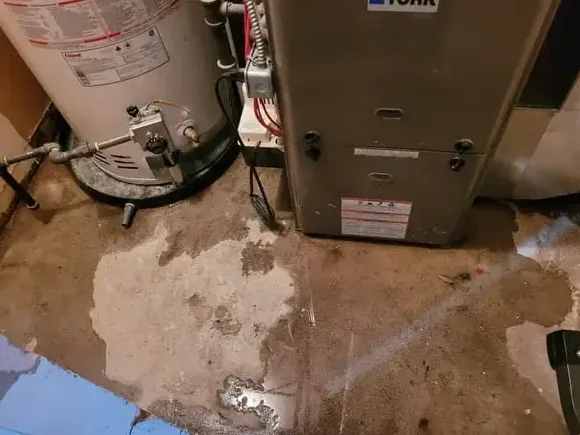
Most tank water heaters here sit in a garage, an interior closet or a small exterior closet, and some sit in attics. Hard water builds sediment in the bottom of the tank, and the steel wears through over time until it seeps or splits. A failed tank empties its full load and keeps refilling from the cold supply until someone closes the valve.
Where the water goes
In a garage, water spreads across the slab and under the wall plates into the rooms next door. In an interior closet, it soaks the hallway carpet, the drywall and the bottom of nearby cabinets. An attic tank sends water straight down through the ceiling.
- Drywall and baseboards on the other side of the closet wall
- Carpet pad in the hallway or bedroom next door
- Cabinet bases and laundry room flooring
- Stored boxes on a garage floor
How the cleanup is done
The extraction crew pulls standing water from the floor and the pad. The tech who does the walkthrough then maps the wall bottoms and the flooring next to the tank, because water wicks sideways under walls. Wet pad and drywall that cannot dry in place come out; the rest dries with air movers and a dehumidifier sized to the space.
California requires water heaters to be braced or strapped for earthquakes, so a plumber replacing a failed tank sets the new one up to that rule. Ready.gov earthquake advice covers why strapping matters, and the EPA WaterSense leak checks help catch small drips at fittings before they grow.
Signs a tank is close to failing
- Rust-colored water from the hot taps
- Rumbling or popping from sediment in the tank
- Moisture or rust at the base of the tank
- A tank past about ten years old
A drain pan under the tank catches slow drips, but not a split tank. Knowing where the cold supply valve is matters more.