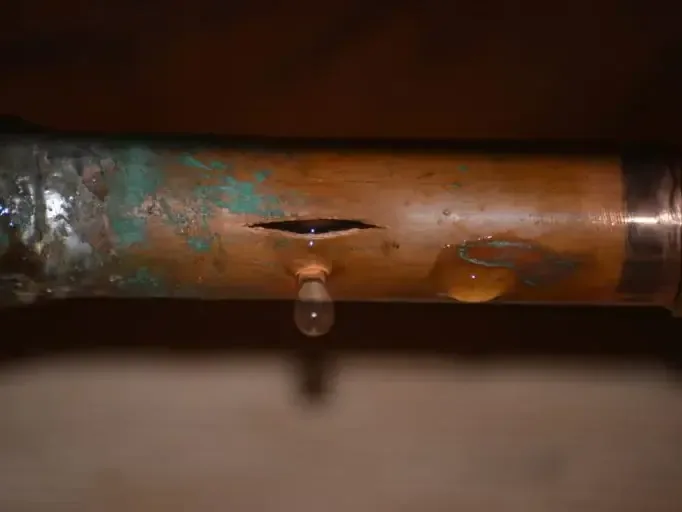
Two kinds of supply pipe failure show up in homes here. Copper pipe develops pinholes, tiny leaks that spray or seep inside a wall or ceiling for weeks before a stain appears. Older galvanized steel pipe, still found in early cottages, rusts from the inside until a threaded joint lets go and floods a room fast.
Where pipe leaks hide
Water from a pipe follows framing and gravity. A pinhole behind a shower valve can show up as swollen baseboard in the next room, and a ceiling pipe can leave a stain far from the leak. In condo buildings, a pipe in one unit often wets the unit below first.
- Behind showers, tubs and kitchen sinks
- In ceilings under upstairs bathrooms and laundry rooms
- At hose bibs and exposed copper on the ocean side of a house, where salt air corrodes fittings
- Where a pipe was nicked or poorly joined during an older remodel
How the cleanup is done without gutting the room
The extraction crew pulls standing water first. Then the tech who does the walkthrough scans the walls and ceiling with thermal imaging and pinless meters to find how far the water traveled. Drywall that cannot dry in place, or that sagged, is cut out in a straight band above the wet zone; the rest dries through small holes with air pushed into the cavity.
Ceiling drywall soaked from above can be heavy enough to fall, so it is checked and opened before anyone works under it. Insulation in a wet ceiling bay usually comes out, because it holds water against the framing.
Repeated pinholes mean an aging system
One pinhole often means the copper is thinning across the house, and plumbers commonly suggest repiping when leaks keep coming back. The drying side stays the same: each leak gets mapped, dried and documented as its own event. The EPA WaterSense leak checks help catch slow leaks early, and the California Department of Insurance explains how homeowners claims work in the state.
A pinhole that sprays inside a wall can soak the cavity and the floor below long before any stain shows on the paint.