Leaks under the concrete

Slab Leak Water Damage in La Jolla, CA

A pinhole in a supply pipe under the slab soaks flooring from below. The drying team lifts what is wet, dries the concrete and wall bottoms and documents every reading for the claim.

(888) 450-9281Warm floor or a moving meter? Call now
Slab moisture mapping Desiccant and LGR drying Photos before flooring comes up
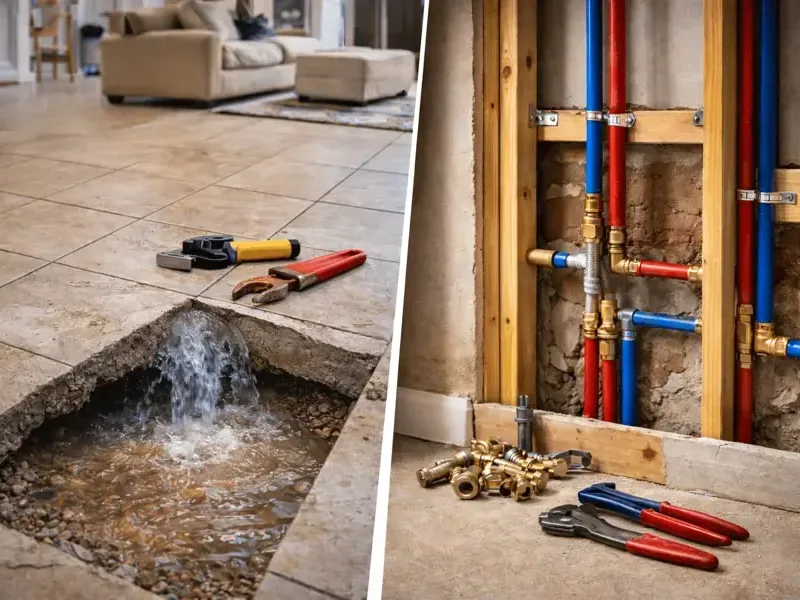
Water rising through a cut-open section of a tiled slab floor at a slab leak
Right now

First steps for slab leak water damage

  1. Check the meter

    With every fixture off, a moving dial or spinning low-flow indicator means water is escaping.

  2. Shut the main

    Closing the main valve stops a slab leak from feeding more water under the floor.

  3. Call a plumber for the pipe

    The leak itself needs a plumbing repair, and drying cannot finish while it runs.

  4. Photograph the floor

    Wet carpet, lifting tile and any warm spots go into the claim file before anything comes up.

The loss at a glance
Water categoryCategory 1, clean supply water
Class of lossClass 4 when concrete is soaked
Typical dryingAbout 4 to 10 days
Done whenWithin 2 to 4 points of dry
Typical cost ranges

What does slab leak water damage cost in La Jolla, CA?

In La Jolla, CA, slab leak water damage cleanup typically runs $2,500 to $16,000, depending on how many rooms the water reached, the flooring on top and how long the leak ran. The plumbing repair is a separate cost.

Caught early, one room

$2,500 to $5,500
  • Flooring lifted over the wet area
  • Baseboards off and walls vented
  • LGR drying with daily readings

Kitchen and nearby rooms

$5,500 to $10,000
  • Cabinet toe kicks opened
  • Desiccant drying of concrete
  • Containment where needed

Long-running leak

$10,000 to $16,000+
  • Flooring across several rooms
  • Hardwood drying mats or removal
  • Full moisture map and logs

Ranges are typical, not a quote. Water category, square footage, material class and how fast drying started move the number most. The water damage cost calculator gives a closer planning range.

How the work runs

How slab leak water damage is handled

The tech who does the walkthrough maps moisture before any equipment goes down, and the equipment stays until the readings say dry.

Dispatch at any hour

Active water keeps moving through pad, plaster and framing after dark, so the response team treats it as urgent around the clock.

Dried to IICRC S500

Drying is planned from the class of loss and finished on meter readings, not on how the surface looks.

A file the adjuster can follow

Moisture maps, daily logs and photos taken before any demolition go to the insurer with the scope.

Coastal housing know-how

Raised-floor cottages, slab ranch homes, hillside lots and condo stacks each hide water in different places.

  1. Map the slab

    Meters and thermal imaging show how far water spread under the flooring.

  2. Open what must come up

    Pad, laminate and swollen baseboards over the wet area are removed and photographed.

  3. Dry the concrete

    Desiccant or LGR dehumidifiers and air movers run until the slab reads dry.

  4. Verify and document

    Readings at the same points each day go into the claim file.

A slab leak is a pressurized supply pipe failing inside or under a concrete floor. Many ranch homes built here from the 1950s through the 1970s, in the Shores and on the mesa especially, sit on slabs with copper pipe below. Water chemistry and the soil around the pipe wear the copper until a pinhole opens, and the water comes up through the floor before anyone sees it.

Signs of a slab leak

  • The water meter moves with every fixture off
  • A warm spot on tile or wood, usually on the hot water side
  • Carpet that feels damp with no leak in sight
  • Cracked grout, lifting vinyl or cupping hardwood near a wall
  • The sound of running water when nothing is on

The water meter leak test shows whether water is moving with everything off, and the EPA WaterSense leak checks walk through the household basics.

Why the plumber and the drying team are separate visits

A plumber finds and repairs the leak, either by rerouting the pipe through the walls or attic or by opening the slab at the leak. The drying team handles what the water left behind: wet pad and flooring, swollen baseboards, damp wall bottoms and concrete that holds water for days. Insurers often treat the two differently, since many policies pay for the water damage and the access to the leak but not for the pipe itself.

How a soaked slab gets dried

Concrete is a Class 4 material: dense, slow to give up water, and it keeps wetting whatever sits on it. The tech who does the walkthrough maps how far the water spread under the flooring with meters and thermal imaging. Carpet pad and laminate over the wet area usually come up; tile and hardwood are judged by readings. Then the drying team runs LGR or desiccant dehumidifiers with air movers, sometimes under a tent of plastic, until the concrete and the wall bottoms read dry.

  • Baseboards pulled and small holes drilled to vent wall bottoms
  • Desiccant dehumidifiers for dense, cool concrete
  • Daily readings at the same marked points

Meter questions and billing for a leak that ran for weeks go to City of San Diego Public Utilities, which supplies water to homes here.

Hardwood over a wet slab starts to cup within days. Lifting and drying early often decides whether the floor is dried or replaced.

Related

Related water damage services

Service area

Slab leak water damage across La Jolla and nearby

Coverage runs through ZIP 92037 and the post office box and campus ZIPs around it, from the Village and the Shores to Bird Rock, Windansea, Muirlands and the slopes of Mount Soledad.

Nearby coverage reaches Del Mar, Torrey Pines, University City, Pacific Beach, Clairemont, Bay Park.

Coverage map

Every neighborhood and ZIP covered

Questions

Slab Leak Water Damage: common questions

How do I know if I have a slab leak?

A moving water meter with everything off, a warm spot on the floor, damp carpet with no visible source and cracked or lifting flooring are the usual signs. The water meter leak test confirms whether water is escaping.

Does the slab have to be broken open?

Not always. Plumbers often reroute the pipe through walls or the attic. When the slab is opened, it is opened at the leak, not across the floor.

How long does a wet slab take to dry?

Usually four to ten days, depending on how long the leak ran, the concrete thickness and the flooring on top. The readings decide, not the calendar.

Can hardwood over a slab leak be saved?

Sometimes, when drying starts early. Floor drying mats pull water up through the boards, but floors that have cupped badly or buckled usually come out. See hardwood floor drying.

Does insurance cover slab leak damage?

Many policies cover the water damage and the access to the leak but not the pipe repair itself. Coverage depends on your policy, so check with your own insurer.

Why are slab leaks common in older ranch homes?

Copper supply pipe laid under concrete decades ago wears from the inside and the outside, and hot water pipes fail most often. Once one pinhole opens, others often follow.

Water emergency dispatch, 24/7

Meter moving with every tap off? Start the slab dry-out.

Moisture mapping, flooring removal where needed and concrete drying, 24/7.

(888) 450-9281Have the slab leak mapped and dried
Call (888) 450-9281 24/7