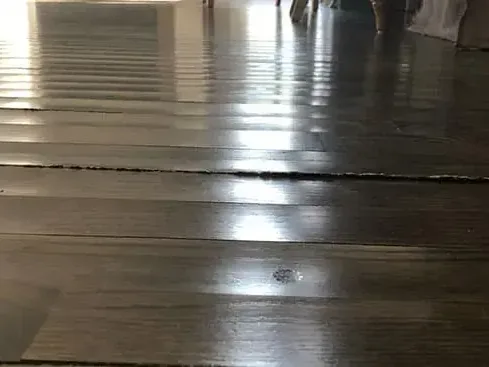
Wood flooring is a big part of what many homes here are worth, from older oak strip floors in Village and Bird Rock cottages to wide-plank walnut and engineered floors in newer remodels. Water from a slab leak, a pipe, an appliance or a storm gets into the seams and the underside of the boards, and the floor starts to change shape within days.
Cupping, crowning and buckling
When the bottom of a board takes on more water than the top, the edges rise and the board cups. Sanding a cupped floor too early leaves it crowned once it dries, and badly soaked floors can buckle and lift off the subfloor. Reading the wood moisture tells the drying team which of these is happening and whether the floor can come back.
- Cupping: edges higher than the center, usually from water below
- Crowning: center higher, often from sanding too soon
- Buckling: boards lifting off the subfloor or slab
How floor drying mats work
Panel mats sealed to the floor surface connect to a vacuum unit that pulls air and moisture up through the boards. Air movers and LGR or desiccant dehumidifiers dry the room and the subfloor or slab below at the same time. The drying team takes readings on the wet boards and on dry boards elsewhere in the house, and the goal is to bring the wet floor close to that dry reference. Research from the USDA Forest Products Laboratory explains how wood swells and shrinks with moisture.
When a wood floor cannot be saved
Floors soaked by sewage or outside storm water are removed, because wood cannot be disinfected. Engineered floors with a thin wear layer and floors glued down over a wet slab are harder to save than solid nailed-down boards, and floors that sat wet for days before drying started often cup past recovery. Photos and readings from day one show the insurer why each decision was made; the California Department of Insurance covers how to work a homeowners claim.
Hold off on sanding a cupped floor. Many floors flatten as they dry, and sanding too early locks in a crown.