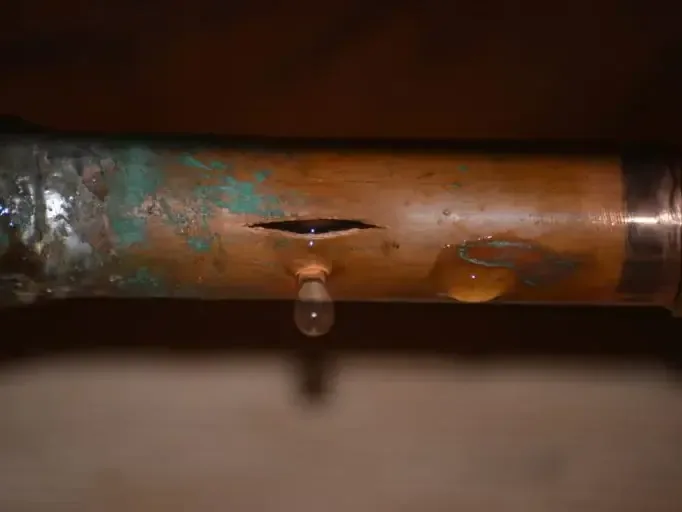
Copper pinhole leaks and hard water go together in La Jolla. The minerals in hard water slowly eat tiny holes into copper supply pipe, and a hole the size of a pinprick can spray enough water inside a wall to soak insulation, drywall and the ceiling below.
Key takeaways
- A pinhole in a pressurized copper pipe sprays a thin jet of water, so the damage grows in the wall long before a stain appears.
- Hissing sounds, bubbling paint, stained ceilings and an unexplained jump in the water bill are the usual warning signs.
- The wet wall or ceiling is opened at the wettest point, the water and soaked insulation are removed and the cavity is dried.
- A plumber repairs the pipe, and the drying team works around that repair so the wall can be closed once it reads dry.
- One pinhole often means more are coming, so a pipe that has failed once deserves a plumber's opinion on the rest.
How hard water wears holes in copper
Hard water carries dissolved minerals. Over the years the flow inside a copper pipe can wear a thin spot into the wall of the pipe, and the thin spot eventually gives way as a pinhole.
Copper pinhole leaks are one of the common failure patterns in La Jolla homes, along with slab leaks and galvanized pipe in older houses.
The pipe carries full household pressure, so a pinhole does not seep. It sprays.
Why a tiny hole does so much damage
A fine jet of water inside a wall hits the back of the drywall, runs down the studs and soaks insulation. A hole smaller than a grain of rice can release a surprising volume over a few days.
Because the water stays inside the cavity, nothing shows on the surface at first. The wall looks normal while the framing and the back of the drywall stay wet.
Walls
Water runs down inside the wall and collects at the bottom plate. It can then wick into baseboards and the edge of the floor.
Ceilings
A pinhole on a pipe above a ceiling drips onto the drywall from above. The ceiling often sags or stains well after the pipe started leaking.
Warning signs worth acting on
Many of these signs are easy to dismiss one at a time. Together they point to a leak.
- A faint hissing sound from a wall when no fixture is running
- Paint that bubbles or drywall that feels soft to the touch
- A stain on a ceiling that grows even when the weather is dry
- A musty smell in a closet, a hallway or beside a bathroom wall
- Low pressure at one tap that was normal before
- A water bill that rises with no change in daily use
Pinhole leak or condensation?
Cold pipes can sweat in warm, damp air, and the drips can look like a leak. Damp marine air on the coast makes that confusion possible.
- Condensation forms along the whole length of a cold pipe, while a pinhole shows at one spot.
- Sweating fades when the air dries out, while a leak keeps going.
- A leak makes the water meter move with every tap closed, while sweating does not.
What the response looks like
The goal is to reach the wet area with the smallest opening that works. The drying team follows moisture readings rather than guessing where to cut.
Locating and opening the wet area
A moisture meter and, where it helps, a thermal camera map the wet wall or ceiling. The opening goes at the wettest point, and it grows only if readings show the water traveled farther.
Extraction and removal
Standing water is pulled out of the cavity, and soaked insulation is removed rather than dried in place. Drywall that has stayed wet for a long time is usually cut out.
This is the core of pinhole and burst pipe leak work, and it starts as soon as the water is shut off.
Drying the cavity
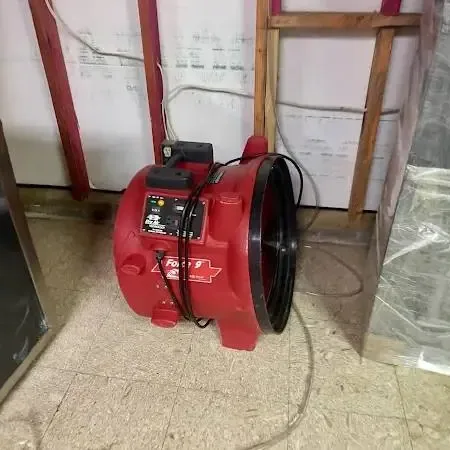
Air movers push dry air into the cavity through small openings, and a dehumidifier removes the moisture from the room. Readings are logged each visit, and the wall is closed only after the framing reads dry.
When the ceiling is the victim
A pinhole in an upstairs wall or an attic pipe often shows up first as a stain on the ceiling below. A sagging or bulging ceiling holds water, so people stay out from under it and keep lights on that circuit off until it is checked.
Opening the ceiling lets the trapped water drain and exposes the wet insulation. A ceiling leak water damage job keeps the opening neat so the repair afterward is smaller.
After the pipe is repaired
Once the plumber has repaired the pipe, the drying phase decides when the wall can be closed. A wall that looks dry on the surface can still hold water in the studs and the bottom plate.
Structural drying readings are logged each visit and compared with a dry reference, so the opening is not closed too early.
- Readings in the studs, the bottom plate and the back of the drywall must all fall to a dry level.
- Insulation is replaced only after the cavity has dried.
- Small access openings are patched before paint and trim are redone.
- The plumber's notes on the repair stay with the job record.
What to do while waiting for help
A few simple steps keep a small problem from becoming a larger one.
- Shut off the main water valve if the source is not obvious.
- Move furniture, rugs and electronics away from the wet wall or ceiling.
- Photograph the stain, the wall and any water on the floor.
- Open cabinet doors on a wet wall so the air can reach the back of them.
- Do not poke holes in a bulging ceiling without a plan for the water.
Questions
Why does hard water cause pinhole leaks?
Dissolved minerals and flowing water wear at the inside of a copper pipe over many years. A thin spot forms and eventually opens into a pinhole.
Can a pinhole leak be patched?
A plumber may repair a short section, but a pipe that has failed once can fail again nearby. The plumber is the right person to judge how much of the pipe to replace.
How big does the opening in the wall have to be?
Only as big as the moisture readings call for. The team starts small at the wettest spot and widens it only if the water traveled farther.
Will the wall always need to be cut open?
Not always. Small, recent leaks can sometimes be dried through small access holes, while soaked drywall and insulation are removed.
Is a wet ceiling dangerous?
It can be. Water adds weight and can reach light fixtures, so people stay clear of a sagging ceiling and keep that circuit off until it has been checked.
Do pinhole leaks come in groups?
They can. The same water that wore one thin spot into a pipe is often wearing others, so a plumber may suggest checking nearby sections.