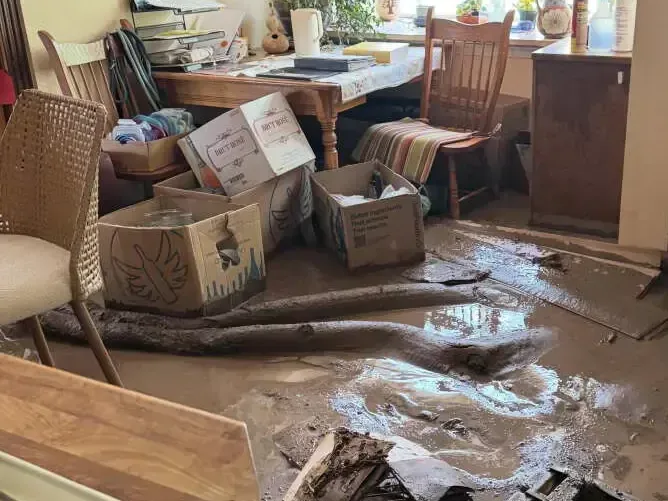
On January 22, 2024, the San Diego airport gauge recorded about 2.7 inches of rain in a single day, one of the wettest days on record there. For a coast that averages roughly 10 inches in a whole year, a day like that delivers a large share of the season at once.
Key takeaways
- Most of the yearly rain falls from November to March in a few storms, so one heavy day can deliver a large share of the total.
- Storm water enters through garage doors, door thresholds, low patios, stairwells and the lower levels of hillside homes.
- Water that has been in a house for a day or two soaks into carpet pad, baseboards and the bottom of drywall.
- Extraction comes first, then the lower walls and floors are opened and dried with equipment and readings.
- A short checklist before the wet season costs little and shortens a cleanup afterward.
What the gauge recorded
The airport gauge is the reference point for local rain totals. On January 22, 2024, it logged about 2.7 inches in one day, which was one of the wettest days on record at that gauge.
The yearly total there is roughly 10 inches, and most of it falls between November and March. A storm that drops more than a quarter of a typical year in a single day shows how little room the ground and the drains have to cope.
Why a few storms matter so much
A Mediterranean coast gets its rain in bursts, with long dry months in between. Soil and storm drains are often dry and compacted when the first heavy storm hits.
Hard, fast rain runs off instead of soaking in, and it heads for the lowest point it can find. That point is often a garage, a patio door or the bottom floor of a house.
Dry ground, fast rain
After a long dry stretch, soil and pavement shed water instead of soaking it up. A short, intense burst of rain can overwhelm gutters and patio drains that handled ordinary rain all year.
Because the heaviest storms are few, many households meet their first real test of the season in the middle of one.
Hillside runoff
Rain that falls on the slopes around Mount Soledad runs downhill toward the streets and lots below. Hillside runoff is one of the named local water patterns, and it can reach lower levels and garages quickly.
Where storm water gets in
A storm of that size does not need a flood to cause a loss. A few inches at the wrong spot are enough.
The path matters because it tells the crew where to look for hidden water. Water that came under a garage door often travels along the slab into the rooms behind it, and water that came down a stairwell collects at the lowest floor.
- Under a garage door or through a garage side door
- Across door thresholds and sliding door tracks at ground level
- Down stairwells and into low patios that sit below the floor level
- Through the lower levels of homes built into a hillside
- Through roof, flashing or window leaks that show up as ceiling stains
What happens to a house in the first day or two
Water that stays in a house does not stay on the surface. It moves into materials, and the longer it sits, the more it takes with it.
Carpet, pad and flooring
Carpet pad soaks up water and holds it against the floor. Hard floors can lift or cup at the seams, and water can run under them to places no one can see.
Drywall and baseboards
Drywall wicks water upward from the floor. Baseboards swell, paint bubbles and insulation inside the wall stays wet well after the surface looks dry.
Cabinets and contents
Cabinet bases soak up water from the floor, and boxes stored on a garage floor wick it upward. Lifting items onto shelves or pallets early keeps them out of the damage.
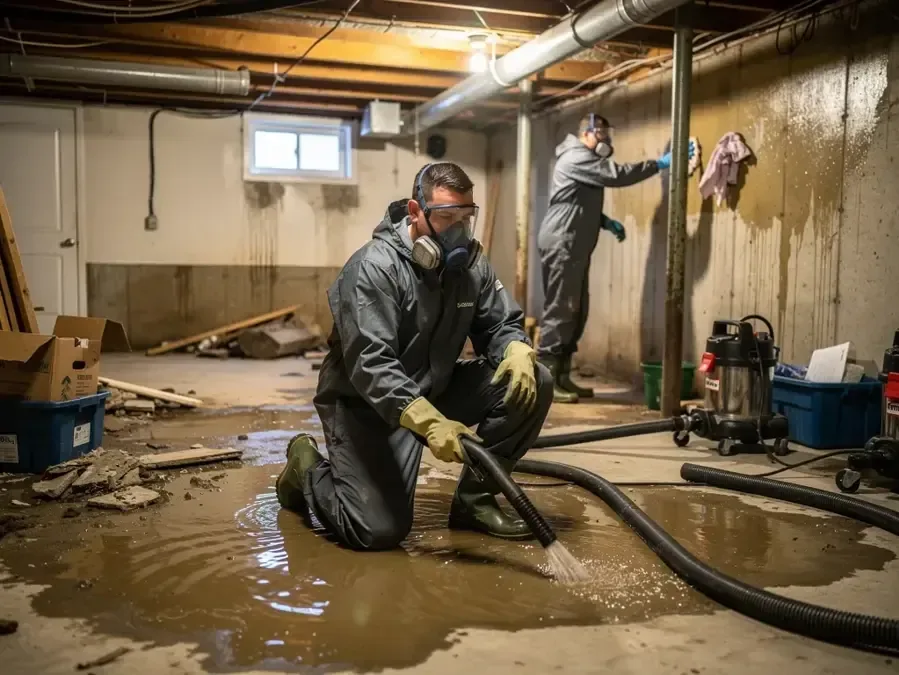
What extraction and drying look like
Storm cleanup follows a set order, and the order protects the structure.
Water extraction comes first. Pumps and extractors remove standing water, and the crew works from the lowest point outward.
After that, storm water and flash flood cleanup turns to the damaged materials: wet pad and insulation come out, and the lower part of wet drywall is cut back so the wall can dry.
Once the materials are removed, structural drying readings set how long the equipment stays.
- Standing water is pumped or extracted, starting at the lowest point.
- Wet carpet pad, baseboards and insulation are removed.
- Lower drywall is cut back to a clean, dry edge where readings call for it.
- Air movers and dehumidifiers run until readings confirm the structure is dry.
- Photographs and logged readings document each step.
Documenting the loss
Before and after photographs, a list of removed materials and the daily readings make a clear record. The record helps the household decide what to repair and when.
What to do while the storm is under way
Safety comes first when water is entering a home during a storm.
- Stay out of rooms with standing water if outlets, cords or appliances are near it, and leave the power decision to an electrician.
- Move valuables up and off the floor if it is safe to do so.
- Photograph water levels and entry points with the time noted.
- Do not run vacuum cleaners or fans in standing water.
- Call for extraction once it is safe to enter the affected rooms.
Getting ready before the wet season
Preparation before November makes a first storm easier to handle. Most of it takes an afternoon.
- Clear gutters, downspouts and patio drains so water leaves the house.
- Check the seal under garage doors and the weatherstripping on exterior doors.
- Move stored boxes, rugs and electronics off the floor in garages and lower rooms.
- Know where the main water shutoff is, in case a storm exposes a broken pipe.
- Walk the property during the first rain to see where water collects.
Questions
Why does the airport gauge matter for La Jolla?
It is the reference gauge used for local rain totals in this area. The January 22, 2024 total of about 2.7 inches in one day shows how much rain a single storm can deliver.
How much of the yearly rain falls in a few storms?
Most of it. The yearly total is roughly 10 inches, and most of that falls from November to March in a handful of storms.
Can storm water come in without a full flood?
Yes. A few inches pushing under a garage door or across a threshold can soak flooring and the bottom of the walls.
Does hillside runoff reach homes below?
It can. Runoff off Mount Soledad runs downhill and can find garages, lower levels and doors at the bottom of a slope.
What gets removed after storm water?
Wet carpet pad, baseboards and insulation usually come out, and the lower part of wet drywall may be cut back. Readings decide the details.
When should extraction start?
As soon as it is safe to enter the room. Water that sits for a day or two soaks into pad, baseboards and the bottom of the walls.