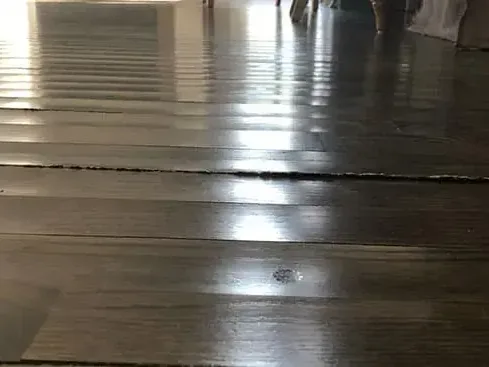
Many of the beach cottages in Bird Rock, Windansea, the Village and the Beach-Barber Tract date from the 1910s to the 1940s, and their wood floors sit raised above the ground. That design leaves a hidden cavity under the boards, and a leak or storm water can fill it long before the room above shows damage.
Key takeaways
- A raised wood floor has an open cavity underneath, so the subfloor and joists can be soaked while the boards still look nearly normal.
- Cupped edges, a soft or bouncy spot and a damp smell near a wall are early signs that water is below the floor.
- The first moves are to stop the water source, lift rugs and furniture off the floor and photograph everything before it is moved.
- Extraction comes first, then boards, subfloor and joists are dried together and checked with moisture readings.
- Boards that cup are judged only after the floor reads dry, so sanding or replacement waits for the numbers.
Why raised floors in older cottages hide water
A raised floor rests on joists that sit above the soil, with open space between the ground and the underside of the boards. In the older cottages of Bird Rock, Windansea and the Village, that space is part of the original design.
Water that gets into the cavity has nowhere to run. It soaks the subfloor, wets the joists and climbs into the boards from below.
That is why a floor can feel solid underfoot while the structure under it is soaked. By the time the finish cups, the water has often been working for days.
Signs that water is under the floor
Normal wear and water damage can look alike on an old wood floor, so a few checks help tell them apart.
- Board edges that curl upward into a shallow dish, known as cupping
- A soft, springy or uneven patch that was firm before
- Gaps opening between boards, or the ends of boards lifting
- A damp, musty smell near a baseboard, a closet or a wall that backs onto a bathroom
- A floor surface that feels cooler or clammy compared with the rest of the room
Where the water usually comes from
Three sources account for most wet floor cavities in older homes.
Supply and drain pipes under the floor
Pipes that cross the cavity can leak for a long time without a visible drip. Older homes in the area can carry copper or galvanized supply pipe, and hard water slowly wears pinholes into copper.
A small spray under the boards is easy to miss, yet it keeps the cavity damp. A pinhole or burst pipe leak is traced and repaired by a plumber, while the drying team handles the wet floor system.
Storm water and runoff
Most of the yearly rain, roughly 10 inches at the San Diego airport gauge, falls between November and March in a few storms. On January 22, 2024, that gauge recorded about 2.7 inches in a single day.
In a downpour of that size, water can push in at door thresholds and low spots, then drain into the cavity beneath the boards.
Appliance and fixture leaks
A dishwasher hose, a toilet supply tube or a refrigerator ice maker tube can drip for weeks onto a kitchen or bathroom floor. A raised floor gives that water a path down and out of sight.
First steps on the first day
The order of the first steps matters more than speed alone. Stopping new water comes before everything else.
- Close the shutoff for the leaking fixture, or the main shutoff if the source is unclear.
- Lift rugs, mats and furniture off the wet area so the boards can breathe.
- Photograph the floor, the baseboards and any standing water before anything is moved.
- Keep foot traffic light on a heavily wet floor, since walking can push water deeper into the joints.
- Avoid drilling, prying or nailing into the boards to see underneath.
- Ask for moisture readings before any board is pulled up.
Why a box fan is not enough
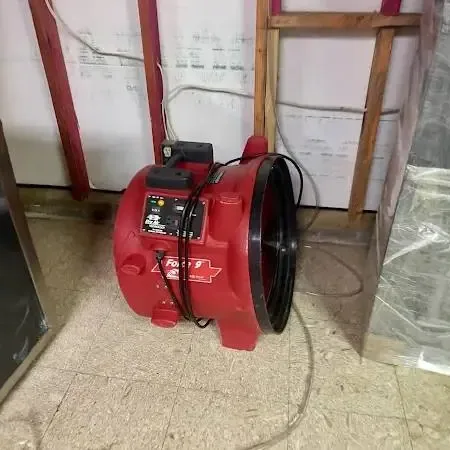
A fan moves air across the surface of a wet floor, but it does little for a soaked cavity. The water inside the structure needs equipment that lowers humidity and draws moisture out of the wood.
How the drying team handles a raised floor
The work follows a fixed order: remove the water, open access, dry the boards and the structure together, then confirm with readings.
Extraction and access
Standing water comes out first, from the room and, where it can be reached, from the cavity. Access is made at a baseboard, a closet floor or a small section of board.
A water extraction crew uses pumps or extractors sized to the job, since a few gallons left in the cavity keep the joists wet.
Drying boards, subfloor and joists together
Floor drying mats pull moisture upward out of the boards. Air movers and a dehumidifier lower the humidity in the cavity so the subfloor and joists can release water too.
This is the core of hardwood floor water damage work on a raised floor: the boards and the structure are dried as one system, not one after the other.
Readings decide what stays
Meters are used on the boards, the subfloor and the joists, and the readings are logged at each visit. Equipment stays until the numbers show the structure is dry.
- Boards that return flat after drying are kept.
- Boards that stay cupped or crowned are sanded or replaced once the floor reads dry.
- Wet insulation under the floor is removed rather than dried in place.
Damp coastal air slows drying
The coast brings damp marine air, with May gray and June gloom, so drying cannot lean on open windows and warm afternoons. Dehumidifiers matter as much as air movers in a cottage near the Pacific Ocean.
Without enough equipment time, a raised floor cavity can stay damp for weeks, and a damp cavity keeps feeding moisture back into dry boards.
Structural drying is measured from readings at the same spots each day, so a dry surface is never mistaken for a dry floor.
Getting a cottage ready for the next heavy rain
A few habits before November lower the odds that a storm ends up under the floor.
- Clear gutters and downspouts so roof water leaves the house instead of pooling at the walls.
- Look at door thresholds and low patios for spots where water collects.
- Move stored boxes and rugs off floors that sit near exterior doors.
- Learn where the main water shutoff is and make sure it turns.
- Check under sinks and behind appliances for dampness at least once a season.
Questions
Can a raised wood floor be dried without taking up the boards?
Sometimes. Drying mats and small access openings let the team treat the boards and the cavity at once, and readings show whether the boards are letting go of moisture. Boards that stay badly cupped may still need to be replaced.
Why do boards cup after a leak?
The underside of a board takes on moisture first and swells, which pulls the edges upward. Once the floor is dry, mild cupping often settles, which is why sanding waits for dry readings.
Is a musty smell under the floor a sign of a leak?
It can be. A damp cavity holds odors, and a smell that grows after rain or near a plumbing wall deserves a moisture check.
Should the water be shut off at the main?
If the source is unclear or the leak is active, yes. Closing the main stops new water while the cause is traced.
How long does a wet floor system take to dry?
It depends on how much water got in, the materials involved and the daily readings. The team keeps equipment running until the boards, subfloor and joists all read dry.