Many older homes in La Jolla still rely on sewer laterals made of clay or cast iron, and mature trees put roots close to those pipes. When roots find a joint or a crack, the pipe can clog, and the first sign is often water or sewage coming up in the lowest tub, shower or floor drain.
Key takeaways
- Clay and cast iron laterals in older homes can crack, shift or corrode, and tree roots enter through the joints.
- Gurgling drains, slow drains in more than one fixture and sewage in the lowest drain point to a blockage in the main drain.
- Stop using water, keep people and pets out and avoid chemical drain cleaners until a plumber has looked.
- A sewage backup is treated as Category 3 water, so porous materials such as carpet and pad usually come out.
- The plumber clears or repairs the pipe, and the cleanup team handles contamination, removal and drying.
Why older laterals fail
A lateral is the drain pipe that carries wastewater from the house to the sewer main. In older homes it is often clay or cast iron, and both materials age.
Clay joints can shift and open over time. Cast iron can corrode and develop rough scale inside, which catches paper and grease.
Clay compared with cast iron
The two materials fail in different ways, though both end up with the same result.
- Clay pipe comes in short sections, and the joints between them can shift and open.
- Cast iron pipe comes in longer runs that corrode and grow rough scale inside, which catches paper and grease.
- Either one can crack or bend under age, ground movement and the pressure of roots.
How roots get in
Mature trees send roots toward moisture. A joint or a hairline crack in a pipe gives roots a way in, and once inside they grow into a mat that catches waste.
Roots can clog a pipe slowly, so the first backup often comes after months of slow drains that no one connected to the trees outside.
Signs of a backup
A blockage in the main drain affects every fixture that feeds into it. The signs often show in the lowest part of the house first.
- Gurgling sounds from drains when a toilet is flushed or a washer drains
- Slow drains in more than one fixture, not just one sink
- Water or sewage rising in a tub, shower or floor drain
- A sewer smell near a drain, in a garage or in a lower bathroom
- A toilet that bubbles when another fixture is used
A slow warning that is easy to miss
Roots rarely block a pipe overnight. The drains in a house with a root problem often run slowly for weeks, then back up when a washer or a full bathtub adds a large flow at once.
A plumber who looks inside the pipe with a camera can see the roots, the joints and any offset, which shows whether a clearing will last or the pipe needs repair.
Safe first steps
Sewage carries bacteria, so safety comes before cleanup.
Wearing gloves, boots and a mask is sensible for anyone who must enter the area before the crew, though entering at all is best avoided.
- Stop using water: no flushing, no showers and no washer or dishwasher.
- Keep children, pets and anyone with health concerns out of the affected rooms.
- Avoid touching standing water, and do not walk through it in street shoes.
- Skip chemical drain cleaners, which can splash and do little for a root blockage.
- Photograph the area before anything is moved.
- Call a plumber for the blockage and a cleanup team for the contamination.
What Category 3 cleanup means
Sewage is classed as Category 3 water, the most contaminated category. The label drives what is kept and what is removed.
Porous materials that took on sewage, such as carpet, pad and soft baseboards, are usually removed. Hard surfaces can be cleaned and disinfected.
The same rule applies to drywall near the floor. Drywall that sewage reached is cut back above the wet area, since it cannot be reliably cleaned.
Containment and protection
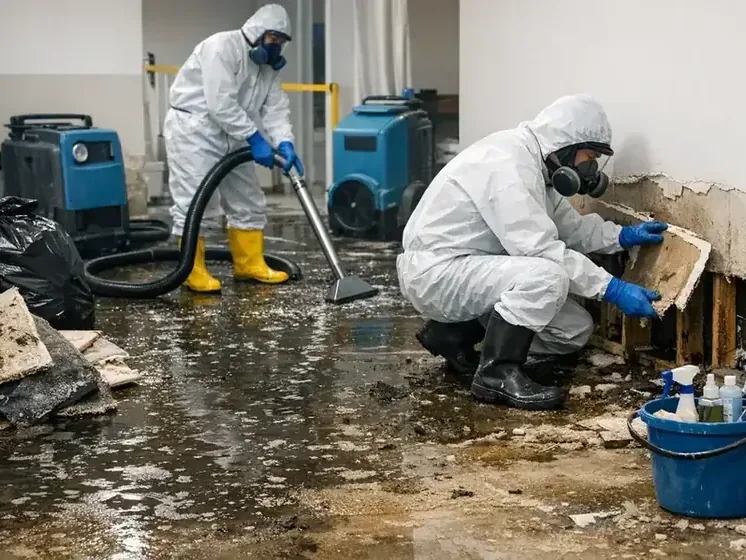
The crew wears protective gear, closes off the affected rooms and sets airflow so contaminated air does not drift into clean areas.
Removal, cleaning and drying
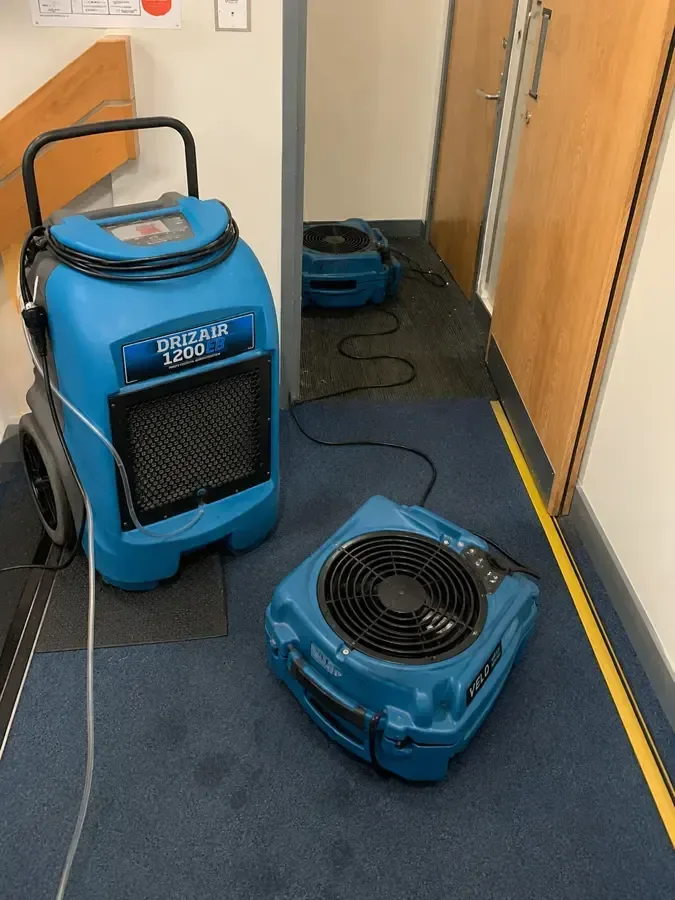
Contaminated materials are bagged and removed, hard surfaces are cleaned and disinfected, and the structure is dried with air movers and a dehumidifier.
This is the heart of sewage backup cleanup, and it is separate from the plumbing repair that stops the backup.
Belongings and contents
Items that touched sewage are judged by material. Hard items can be cleaned and disinfected, while porous items are usually discarded.
A quick photograph of each item before it is moved or thrown away keeps a clear record.
- Hard plastic, glass and sealed metal can usually be cleaned.
- Upholstery, rugs, cardboard and paper usually cannot.
- Stored items on a lower floor are checked box by box.
- Clothing and linens are handled by the cleanup team before any washing at home.
Who handles what
A backup involves two jobs that happen at different times. The plumber finds the blockage, clears the pipe and decides whether it needs repair or replacement.
The cleanup team handles what the sewage touched. Water extraction removes standing liquid first, and the drying work afterward uses structural drying readings to confirm the room is dry.
Reducing the odds of a repeat
A pipe that has clogged once is likely to clog again unless the cause is addressed.
- Ask the plumber to look inside the pipe with a camera, which shows cracks, offsets and roots.
- Avoid flushing wipes, grease and other items that catch on rough pipe walls.
- Notice slow drains early, since they often come before a full backup.
- Keep a record of the repair and the date for future reference.
- Keep trees and large shrubs in mind when a plumber recommends a repair, since new pipe in the same path faces the same roots.
Questions
Why do older homes have more sewer backups?
Older clay and cast iron laterals can crack, shift or corrode, and roots enter through the joints. Those problems build up slowly.
Can a homeowner clear a root blockage alone?
Roots usually need a plumber's equipment, and a repair or replacement may follow. A store drain cleaner rarely helps and can splash.
Is the water from a backup always sewage?
A backup from the main drain is treated as sewage, since the water has come from the sewer side. A single toilet overflow with clean supply water is judged differently.
Does carpet have to be removed after a sewage backup?
Usually, yes. Carpet and pad are porous and hard to clean once they have absorbed sewage.
Should the cleanup wait for the plumber?
The plumber stops the cause, but containment and removal can start while the repair is planned. The two jobs are coordinated.
Should the bathroom be used while waiting for help?
No. Any water sent down a drain has nowhere to go and can come out lower in the house.