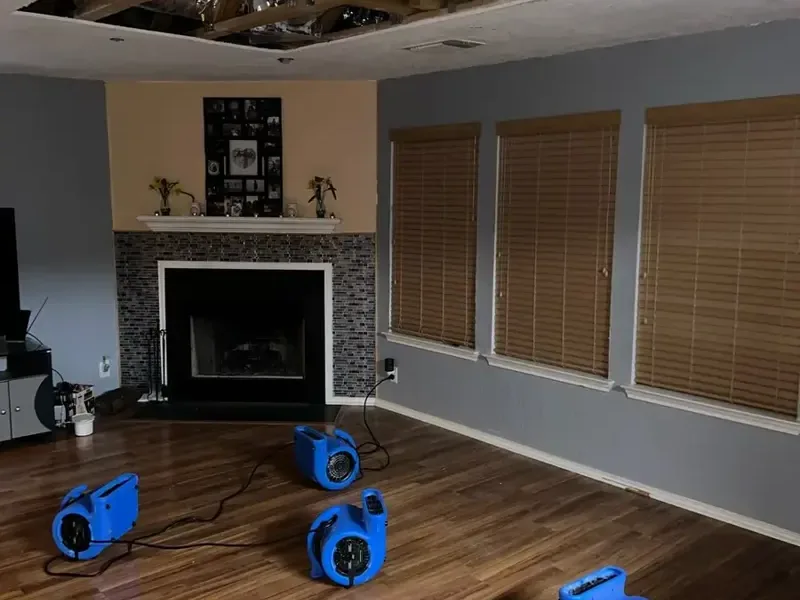
Condo and apartment buildings in the Village and along the coast stack homes on top of each other, so a leak in one unit can reach the one below. In multistory buildings, a ceiling stain is often the first sign that something upstairs has failed.
Key takeaways
- A ceiling leak in a condo usually starts in the unit above, so the source may be a home the resident below cannot reach.
- The first moves are to protect belongings, stay out from under a sagging ceiling and tell the neighbor above and the building manager.
- Water has to be stopped at its source before any drying can hold, which means a shutoff in the unit above.
- The ceiling is opened at the wet spot so trapped water can drain and the cavity can be dried.
- Drying often has to include the floor in the unit above, since the wet path runs through both homes.
How leaks travel between units
In a multistory building, floors and ceilings share space. Water that gets through a bathroom floor or a kitchen floor above drops into the cavity between the units.
From there it spreads along the joists, finds a light fixture or a vent opening, and shows up as a stain on the ceiling below. The stain may sit far from the real source.
Common sources in the unit above
A supply pipe, a drain, a washing machine hose, a dishwasher, a leaking tub seal or a failing water heater can each send water down.
Why the stain moves
A ceiling stain often starts small and grows as the drywall takes on more water. A new stain can also appear in a second room as the water finds a new path.
First steps for the unit below
The resident below usually cannot stop the source, so the early steps are about limiting harm and getting the right people moving.
- Move furniture, rugs and electronics out from under the stain.
- Put a bucket or plastic sheeting where water is dripping.
- Stay out from under a sagging or bulging ceiling and keep lights on that circuit off.
- Photograph the stain, the ceiling and any water on the floor.
- Contact the neighbor above and the building manager at once.
- Ask for the leaking source to be shut off in the unit above.
What to write down
A short record helps everyone later, and it takes only a few minutes.
- The date and time the stain or drip was first noticed
- Where it is, how large it is and whether it is growing
- Any sounds from the ceiling or walls, and any smells
- The names of the people contacted and the times they were told
- Photographs with the date visible
Who needs to know
A condo leak touches more than one household, so communication matters as much as speed. The building manager can tell who has access to the valve that stops the water.
Telling the neighbor above in writing, with a date and a photo, creates a simple record. It also helps the building track whether a shared pipe or a shared drain is involved.
The building manager
The manager knows which valves serve which units and who holds the keys. Many buildings have a process for leaks, so an early call can start it.
The neighbor above
The neighbor may not know a leak exists, especially if the home is empty or the water runs inside a wall. A direct, calm message with a photo usually gets the fastest result.
How the wet ceiling is handled
A wet ceiling is treated as a safety question first and a drying question second. Water adds weight to drywall, and it can reach wiring and fixtures.
Opening the ceiling
The crew opens the ceiling at the wettest point so trapped water drains in a controlled way. Wet insulation comes out, and the opening grows only as far as moisture readings call for.
This is the main task in ceiling leak water damage work, and it protects the rest of the room from a sudden failure.
Walls and flooring below
Water that runs down a wall can wet the top of the drywall, the baseboards and the flooring. Readings are taken in each room, not only under the stain.
Drying across two homes
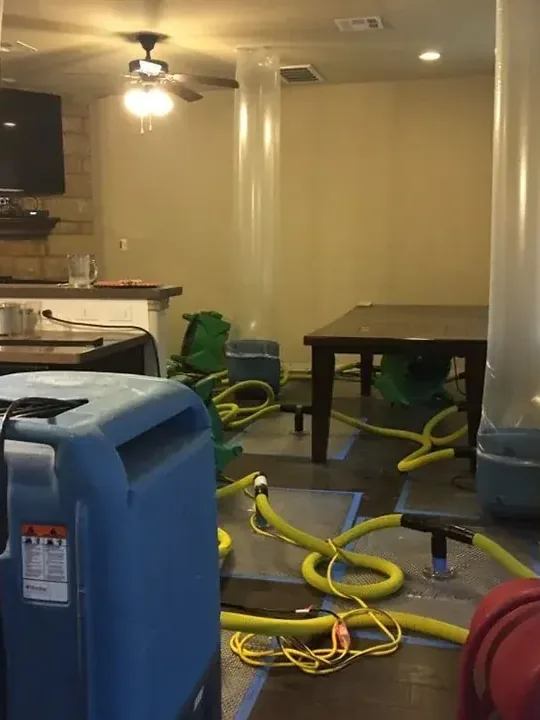
Drying works only if the source stays dry. The unit above may need its own floor cavity opened and dried, since the wet path ran through it.
Equipment is set in both units, and a dehumidifier handles the moisture in the air. Structural drying readings are logged at each visit so both households can see when the building materials are dry.
Where a leak reached several units, commercial water damage methods, including phased drying, keep the work organized across the building.
Living in the unit during drying
Drying equipment is loud and runs around the clock while the structure dries, so households plan for it.
The crew explains where equipment will sit and which rooms to keep clear.
- Leave the equipment running, since switching it off stalls the drying.
- Move electronics and valuables to a dry room.
- Keep children and pets away from opened ceilings and cut drywall edges.
- Expect regular visits for moisture readings until the materials are dry.
- Report any new stain or drip at once, since it can mean the water found a new path.
Keeping a condo leak from happening again
A few habits in the unit above lower the odds of another leak below.
- Check washing machine and dishwasher hoses for bulges, cracks and drips.
- Look at the base of toilets and under sinks for dampness.
- Replace worn tub and shower seals before water finds a way through.
- Know where the unit shutoff valve is, and tell the household.
- Report unusual sounds in the walls to the building manager early.
Questions
What should the unit below do first?
Protect belongings, stay out from under a sagging ceiling and tell the neighbor above and the building manager. The source has to be shut off in the unit above.
Does the ceiling have to be cut open?
Often yes, at the wet spot. Opening it lets trapped water drain and lets the cavity dry, and it prevents the ceiling from failing without warning.
Can the unit above stay in place during drying?
Usually, though equipment may be set in the unit above and some flooring may need to come up. The team plans around the household where it can.
Why does the stain appear in a different room than the leak?
Water runs along joists and through openings before it shows. The stain can sit well away from the real source.
Does drying take place in both units?
When the wet path ran through both, yes. Readings in each unit show whether the structure has dried.
What if the neighbor above is not home?
The building manager may be able to reach the unit or close a shared valve. Telling the manager at once matters more than waiting for the neighbor.