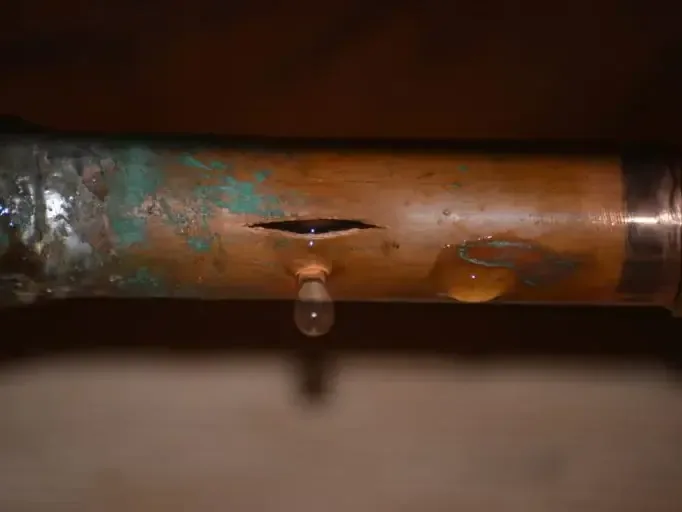
A burst or split supply pipe can release gallons a minute, and the water follows gravity through wall cavities, ceiling bays and floor edges. About 86 percent of the housing here was first built more than 30 years ago, so supply pipes that have run for decades are a reasonable thing to test when a stain or a damp smell appears.
Confirm the leak before opening walls
The city's own test is simple: turn off all water in the house and watch the small dial on the water meter. If it keeps moving, water is leaving the pipes somewhere. Thermal imaging then narrows where to cut, so the holes stay small and the wet path is followed instead of guessed.
Water service in town is run by the city through its Public Works Department, which is available around the clock for the city's own system. Pipes inside the property are a private plumber's job, and drying cannot finish until that repair stops the flow.
What the drying team removes and dries
- Standing water extracted from floors and low spots
- Saturated drywall and insulation cut out in clean sections
- Baseboards and trim pulled where water wicked behind them
- Air movers and dehumidifiers placed to push air into the wall cavities
- Daily readings at marked points until they match a dry wall
Clean supply water is the easiest category to dry, but it does not stay clean for long once it crosses carpet, dust and wood. Wet insulation left in a cavity can start growing mold within 24 to 48 hours, so it is not left to dry on its own.
Records for the claim
Photos taken before demolition, the moisture map and each day's readings give an adjuster a clear record of the loss. The water damage cost calculator shows a rough range, and slab leak water damage is a separate case when the leak sits under a concrete floor.