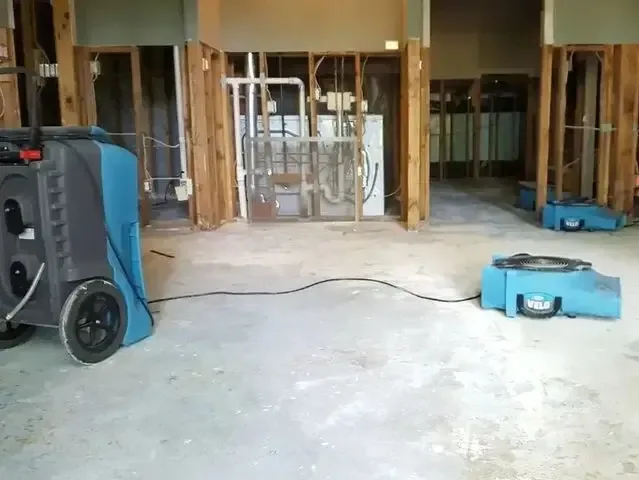
Drying is the stage that decides whether a water loss ends or comes back as mold, swelling and soft framing. It is measured work: the crew sets equipment by the class of the loss, checks every day and does not leave until the structure tests dry.
Older construction and repeat storms
Most homes here were built between 1950 and 1980, so many walls, floors and subfloors have decades behind them. After storm water or a leak, those materials need careful drying, and floodplain areas such as North Beach can see repeat storm exposure, which makes dry records worth keeping.
A wall that looks dry can still hold water in the cavity, in the bottom plate or in the insulation, so the drying team measures instead of guessing. The category of the water matters as much as the class. Clean supply water can usually be dried in place, gray water needs more caution, and black water such as sewage or storm runoff means porous materials come out instead of being dried.
How the drying is controlled
- Water class and category set the equipment plan
- Air movers and dehumidifiers placed where the meters read highest
- Wall cavities vented or opened so air reaches the interior
- Temperature, humidity and material moisture logged each visit
Class 1 and 2 losses involve limited wet material, Class 3 means walls and ceilings are wet from above, and Class 4 covers dense materials that hold water deeply.
Dense materials such as hardwood, plaster and concrete release water slowly, so desiccant dehumidifiers are brought in for the hardest cases. A psychrometric log records temperature, relative humidity and the moisture content of the air, which shows whether the dehumidifiers are keeping up.
When the job is dry
Equipment comes off only after every marked point matches a dry reference. The drying time estimator gives a rough picture of how long equipment may run, and water extraction comes before drying when standing water is present. Skipping this stage is how a damp wall turns into a problem a few weeks later.