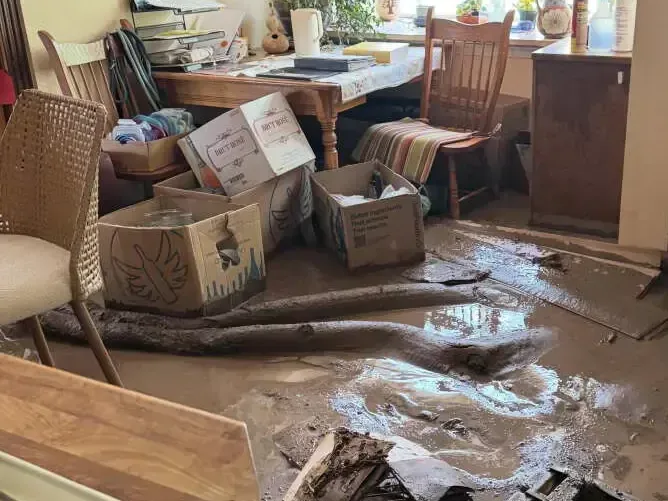
In September 2026, the Del Mar City Council adopted a local emergency because sand had built up in the San Dieguito Lagoon inlet. An open inlet helps carry storm flows to the ocean, so a blocked one raises the stakes for neighborhoods at low elevation just as an El Niño winter approaches.
Key takeaways
- The council acted because sand in the San Dieguito Lagoon inlet can limit how well storm flows leave the area.
- North Beach and the North Commercial area sit lower, in the floodplain along the Pacific Ocean and the lagoon.
- NOAA has forecast that the 2026 to 2027 El Niño could be among the strongest on record, and the governor proclaimed a statewide emergency on September 21, 2026.
- Storm water inside a building is pumped out first, then wet materials come out and the structure is dried with readings.
- A short preparation list before the first big storm saves work afterward.
What the local emergency says
On September 22, 2026, the council adopted a local emergency over the heavy sand buildup in the San Dieguito Lagoon inlet. City staff tied the buildup to a 2024 sand replenishment project in Solana Beach.
The city asked the U.S. Army Corps of Engineers to allow up to 50,000 cubic yards of sand removal per dredge event, up from a 16,000 cubic yard limit. A sand push began near Powerhouse Park in September 2026 as part of storm preparation.
- September 21, 2026: the governor proclaimed a statewide state of emergency to speed El Niño preparation.
- September 22, 2026: the council adopted the local emergency over the sand in the lagoon inlet.
- September 2026: a sand push began near Powerhouse Park as part of winter storm preparation.
Why an open inlet matters
The lagoon inlet is the opening where water leaves toward the Pacific Ocean. When it is open, it helps carry storm flows away and lowers the flood risk for neighborhoods at low elevation nearby.
When sand narrows or closes it, water has fewer places to go. That is the reason the city moved before the rainy season instead of waiting for it.
For a homeowner, the practical message is simple. The weather this winter may be wetter than usual, and the inlet is one of the pieces that decide how fast the water drains away.
Which parts of Del Mar sit lowest
Del Mar is vulnerable to flooding from the San Dieguito River and from the Pacific Ocean, and the city expects that risk to grow over time.
North Beach and North Commercial
North Beach and the North Commercial area sit in the floodplain at a lower elevation, along the Pacific Ocean and the San Dieguito Lagoon. Water coming from the river or the ocean reaches these blocks first.
The Fairgrounds
The Del Mar Fairgrounds, the home of the San Diego County Fair, sits within the San Dieguito River's 100 year floodplain. Businesses and buildings near it share the same flood exposure.
Hillside areas
Crest Canyon and the hillside neighborhoods beside it run along the eastern edge of the city. They face a different problem, since runoff moves downhill and can reach homes along the base of a slope.
What past storms show
Del Mar has been through this kind of event before, and the history shows the range of ways water reaches the city.
- In 1980, heavy rain made Lake Hodges Dam overflow and flooded the low parts of the city, including the Fairgrounds.
- In 1983, a coastal storm led the city to declare a state of emergency, with waves affecting businesses and residents near the beach.
- In December 2015 and January 2016, coastal storms caused a landslide, road closures and damage to a storm drain and utility pipes along Camino del Mar.
What storm water does inside a home
Water that gets inside does not wait. It moves into flooring, baseboards and the bottom of walls within hours.
Extraction first
The first job is to pull standing water out. A water extraction crew works from the lowest point outward, so water does not drain back into rooms already cleared.
Removing and drying wet materials
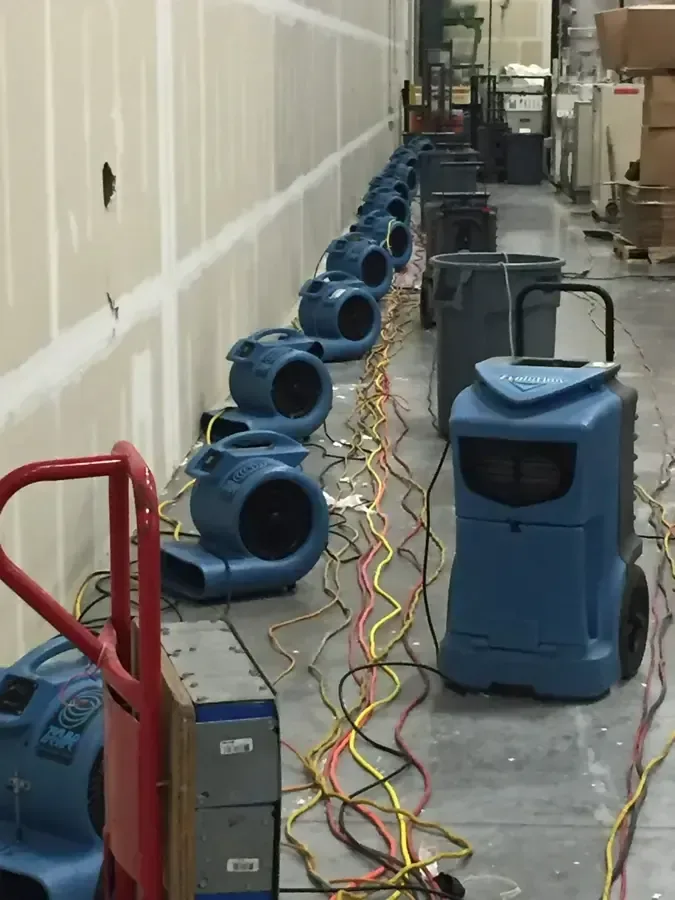
Wet carpet pad and insulation come out, and the lower part of soaked drywall may be cut back. Storm water and flash flood cleanup then moves to air movers and dehumidifiers, with readings logged until the structure is dry.
The second day
Water left behind keeps working after the rain stops. Wet pad, wet baseboards and wet insulation hold moisture against the structure, and the damage spreads the longer they stay in place.
That is why a home that took in a few inches of storm water is treated quickly, even when the room looks nearly dry.
Businesses and buildings in the floodplain
The North Commercial area sits in the lower floodplain, so shops and offices face the same exposure as nearby homes. A storm can leave a business closed longer than the water itself would justify.
A commercial water damage plan keeps part of a space open where it can.
- Raise stock and records off the floor before heavy rain.
- Know where the water shutoff and electrical panel are, and who holds the keys.
- Photograph the space before and after a storm.
- Ask for phased drying so one area can reopen while another dries.
Preparing for the first big storm
With NOAA's strong El Niño forecast and the governor's statewide emergency, preparation is practical rather than dramatic.
- Clear gutters, downspouts and yard drains before the first storm.
- Move stored boxes, electronics and rugs off the floor in ground level rooms.
- Locate the main water shutoff and the electrical panel.
- Keep photographs of the home's condition for later comparison.
- Save the number of a local drying team before it is needed.
Questions
Why did Del Mar declare a local emergency?
Sand had built up in the San Dieguito Lagoon inlet, which can limit how well storm flows leave the area. The council acted ahead of winter storms.
Which neighborhoods are most exposed?
North Beach and the North Commercial area sit lower, in the floodplain along the Pacific Ocean and the lagoon.
What is the El Niño forecast?
NOAA has forecast that the 2026 to 2027 El Niño could be among the strongest on record. The governor proclaimed a statewide state of emergency on September 21, 2026.
What happens to wet drywall after storm water?
Readings decide. The lower part of soaked drywall is often cut back so the wall can dry, and wet insulation is removed.
Does storm water cleanup wait for the rain to stop?
Extraction can begin as soon as it is safe, and the team plans around the weather. The wet structure dries best once rain is no longer adding water.
What is the sand push near Powerhouse Park?
A sand push began near Powerhouse Park in September 2026 as part of the city's winter storm preparation.