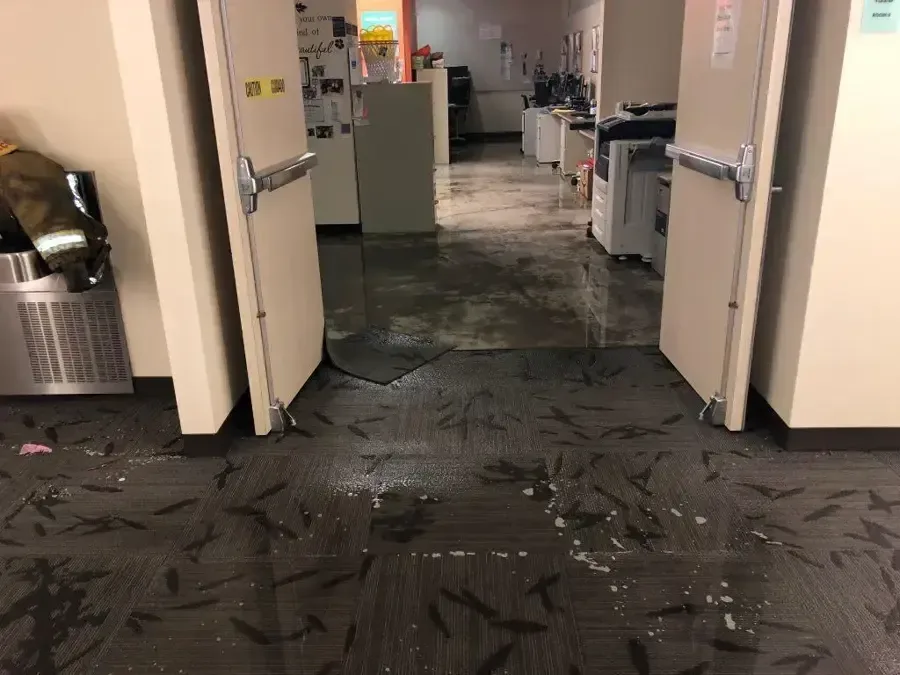
A commercial loss is a business interruption as well as a drying job. The aim is to get the water out, keep unaffected suites open and give owners, tenants and insurers records they can trust. Phased work lets a building keep earning while the wet suites dry, and it keeps the disruption in one area.
Where the exposure is
The North Commercial area sits in the floodplain beside the San Dieguito Lagoon. The Fairgrounds, home of the San Diego County Fair, sits within the San Dieguito River's 100-year floodplain, and older retail such as Stratford Square dates to 1927.
Storm water is one source. A failed supply pipe, a roof leak or a drain backup can wet a shop just as quickly. Roof leaks and storm water often hit stock rooms, corridors and shared walls first, so a loss that begins in one suite can reach several.
How phased drying works
- Each suite is metered and classified on its own
- Plastic containment keeps moisture and dust away from dry areas
- Air movers, dehumidifiers and air scrubbers run suite by suite
- Loud or disruptive work moves to after hours
Commercial flooring such as carpet tile can often be lifted, dried and relaid when the water is clean, while glued-down products and wet drywall behind fixtures need more opening. The team meters before deciding.
Records for every party
Owners, tenants and insurers each need their own set of readings and photos, so everything is organized by suite. Landlords often need proof for the property policy and tenants for theirs, so the same photos are labeled by suite and date. When sewage or flood water is involved, sewage backup cleanup covers the contaminated stage, and the water damage cost calculator gives a rough range.