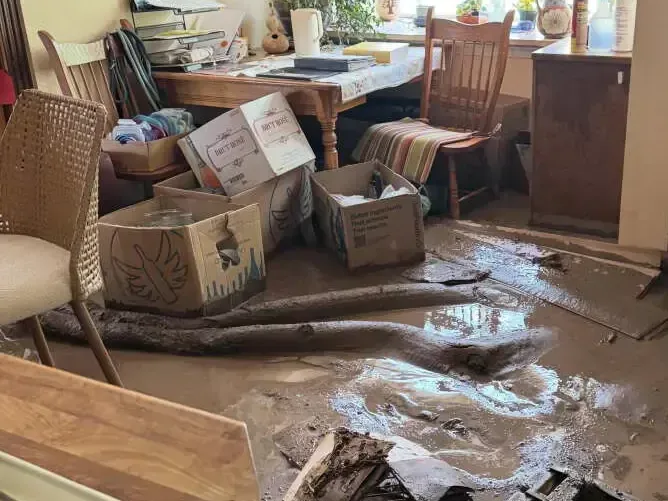
This beach city is vulnerable to flooding from the San Dieguito River and the Pacific Ocean, and the city expects that risk to grow over time. When storm water enters a home it brings mud and debris with it and is treated as contaminated from the start.
A coast with a flood history
Heavy rain in 1980 made Lake Hodges Dam overflow and flooded low-lying areas, including the Fairgrounds. A coastal storm in 1983 led the city to declare a state of emergency, with waves affecting businesses and residents near the beach. Storms in December 2015 and January 2016 caused a landslide, road closures and damage to a storm drain and utilities along Camino del Mar.
In September 2026 the City Council declared a local emergency over sand built up in the San Dieguito Lagoon inlet. An open inlet helps carry storm flows and lowers flood risk for the low-lying neighborhoods beside it.
What flood cleanup involves
- Water pumped out and mud shoveled from floors and low corners
- Carpet, pad and insulation removed where the water soaked them
- Drywall cut back to a clean height above the stain
- Floors, studs and cabinet bases sanitized before drying begins
Furniture and contents are moved out of the wet area and listed, which helps when the insurer asks what was in the room. A flood cut removes the wet lower section of drywall, so the wall above stays and the cavity behind it can dry.
Looking ahead to winter
NOAA has forecast that the 2026 to 2027 El Niño could be among the strongest on record. The city takes part in the National Flood Insurance Program, applies a Floodplain Overlay Zone based on the 2019 FEMA flood insurance rate map and plans to replace the Camino del Mar bridge over the San Dieguito River so it can handle flooding and sea level rise. After a flood, water extraction comes first and structural drying follows.