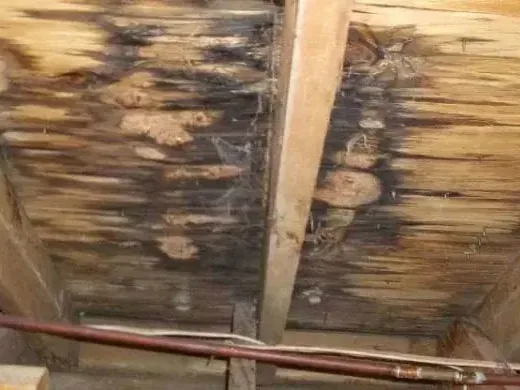
Rain that gets past a roof does not stay where it lands. It runs along decking and rafters, soaks insulation and shows up as a ceiling stain far from the real opening, so the visible mark is rarely the whole loss. A leak that returns after each storm can soak the same ceiling again and again.
Winter rain tests older roofs
Most homes here were built between 1950 and 1980, and heavy winter rain puts the most strain on them. NOAA has forecast that the 2026 to 2027 El Niño could be among the strongest on record, which makes a small leak worth dealing with before the wet season peaks.
The drying team does not repair the roof. A roofer closes the opening, and the drying work removes the water that already got inside, because drying cannot finish while rain keeps entering.
What the crew removes and dries
- Wet attic insulation pulled out before it presses water into the ceiling
- Ceiling drywall opened at the stain so the joist bays can breathe
- Wall cavities below checked for water that ran down the framing
- Air movers and dehumidifiers set up in the attic space and the rooms underneath
Attic work is done carefully, with boards or pads laid across the framing so nobody steps through a ceiling.
Damp insulation and drywall can start growing mold within 24 to 48 hours, so the wet material is taken out instead of being left to dry in place.
Tracking the leak for the claim
Photos of the stains, the moisture readings and the dates of the rain help an adjuster separate sudden damage from long-term wear. When the water has reached rooms below, ceiling leak water damage covers that stage, and the water damage cost calculator gives a rough range.