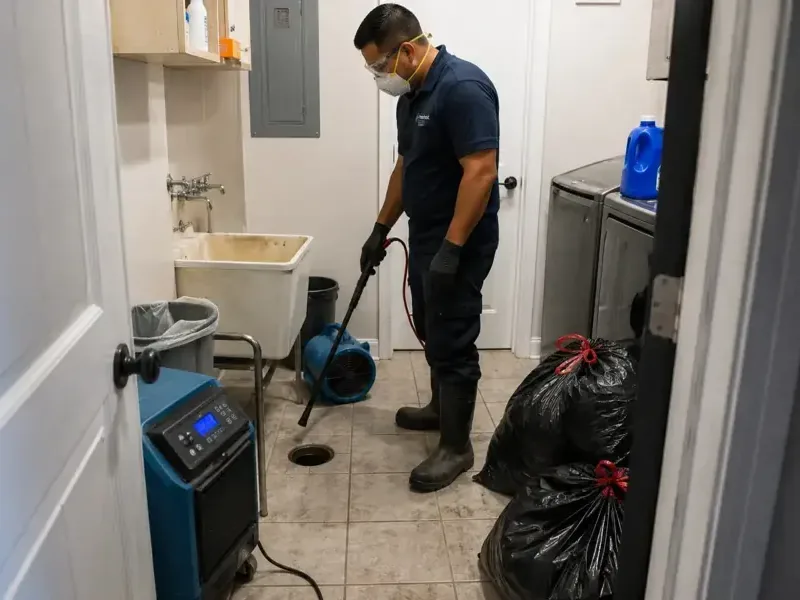
Appliance leaks are quiet. A washing machine hose, a dishwasher drain or a refrigerator water supply can seep for weeks, soaking cabinet bases and subfloors long before a stain or a smell shows. Because the appliance sits against a wall or inside a cabinet run, the water often travels sideways before it appears on the floor.
Leaks in homes that sit empty
About half of the vacant homes here are used for seasonal, recreational or occasional stays, and in those houses a small leak can run unseen. The city's meter dial test helps: with all water off, a dial that keeps moving means water is escaping somewhere. A short trip away is enough: a hose that fails on the first day of a long weekend has the whole weekend to soak the floor.
Where the water hides
- Under toe kicks and inside cabinet bases
- Behind the washer and along the bottom of the wall
- Beneath vinyl, laminate or wood flooring
- In the subfloor and the room below
The longer a leak runs, the more it has to be opened up, which is why a slow leak usually costs more than a quick spill. Flooring gives clues: vinyl or laminate that lifts at the edges, tile with soft grout or a floor that feels spongy near the machine all suggest water underneath.
Drying it out
Toe kicks come off first so air can reach the cabinet base, and cabinets are pulled only if the meters show water that cannot dry in place. Wet material can start growing mold within 24 to 48 hours, so water extraction comes first and drying follows. Subfloor readings decide how much flooring comes up, and a final set of readings at the same marked spots shows that cabinet bases and wall bottoms are dry.